
On August 2, 2026, commemorative events marking International Romani Genocide Remembrance Day took place at the National Historical and Memorial Reserve “Babyn Yar”. The event brought together representatives of the Roma community, government authorities, international organizations, and cultural figures.
Participants walked in a mourning procession from the Entrance Gate along the Avenue of Martyrs to the Avenue of the Righteous, stopping at the "Roma Wagon" memorial sign — a memorial to the Roma shot during the occupation of Kyiv in the years of the Second World War.
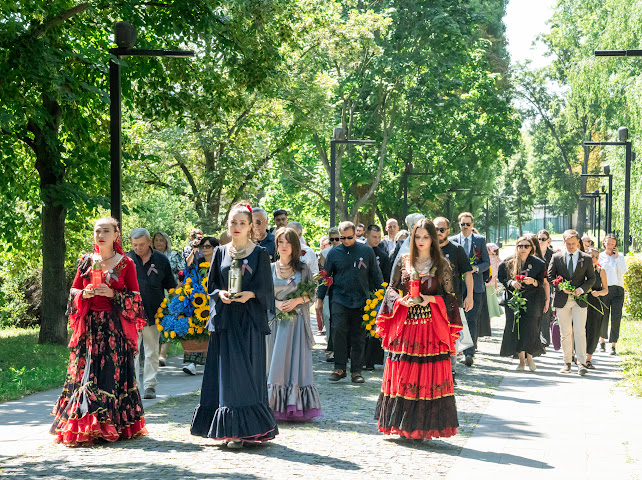
The event's moderator, Natalia Tomenko, Deputy Director of the Youth Agency for the Advocacy of Roma Culture “ARCA”, opened with welcoming remarks and invited those present to join in prayer, led by Archpriest Borys Tabachek, rector of the Holy Vladimir Patriarchal Cathedral. Participants then honored the memory of the victims with a moment of silence and laid flowers, candles, and children's toys in remembrance of the Roma who fell victim to the genocide.
It was on the night of August 2–3, 1944, that nearly three thousand Roma men, women, and children were killed at the Auschwitz-Birkenau camp — this tragedy became the basis for establishing International Romani Genocide Remembrance Day. For Babyn Yar, this is an inseparable part of the history of a place where Jews, Roma, Ukrainians, patients of a psychiatric hospital, and prisoners of war perished during Nazi terror. This year marks 85 years since the mass killings at Babyn Yar.
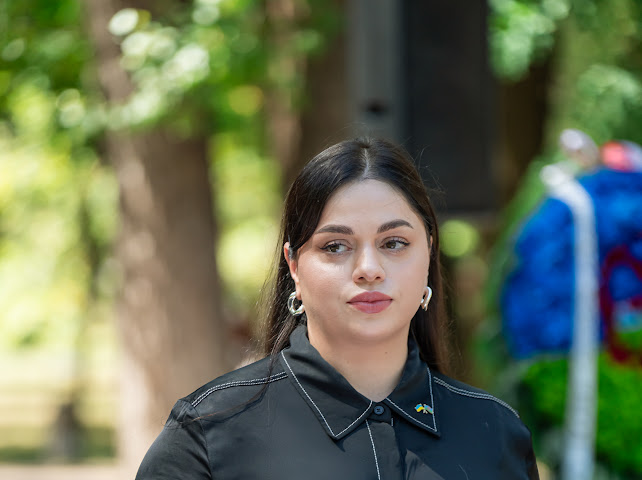
The "Roma Wagon" has become a symbol of remembrance for the Roma genocide — the first memorial in Ukraine dedicated to the victims of the Roma genocide, marking its tenth anniversary this year. Its story began back in 1995, when the idea for the memorial was put forward by Volodymyr Zolotarenko, head of the Roma cultural society "Romanipe"; the memorial's author was Ukrainian architect and artist Anatoliy Ihnashchenko. Twenty-one years passed from conception to unveiling.
Roza Tapanova, General Director of the National Historical and Memorial Reserve “Babyn Yar”, emphasized: "This year marks ten years since the unveiling of the 'Roma Wagon' memorial sign. And twenty-one years passed from conception to unveiling. This path is a reminder of how long the road to recognizing the tragedy of the Roma people has been. Our duty is to make the history of every community visible and to return it to our shared memory. We are convinced that remembrance must not remain merely a date on the calendar. It must live on in research, museum work, education, art, and above all — in cooperation with the contemporary Roma community." She also recalled that last year the Reserve opened the exhibition "Invisible," dedicated to the history and memory of the Roma community: this year it has already been shown in Odesa, and on August 5 it will open in Lviv.
"We are standing at the site of a crime that was, perhaps, one of the most concealed crimes in human history. They tried to hide from us the memory of this genocide and of the people against whom it was directed. I have always pondered the question: how was this possible, and who could commit such a crime? We have read the diaries of Hitler's executioners, and they seemed like ordinary people. After the shootings, they washed their hands, played with their children, loved their pets. Those who today launch missiles and drones at Ukraine also, evidently, later have dinner, watch television series, visit friends, and behave like ordinary people. We said so often: “Never again.” And it happened again. How can ordinary people watch indifferently, or even with delight, as cities are destroyed and people die? In their time, the Nazis also cheered as they shot Roma camps. Something has broken in the world's memory" — Viktor Yelensky, Head of the State Service of Ukraine for Ethnopolitics and Freedom of Conscience.
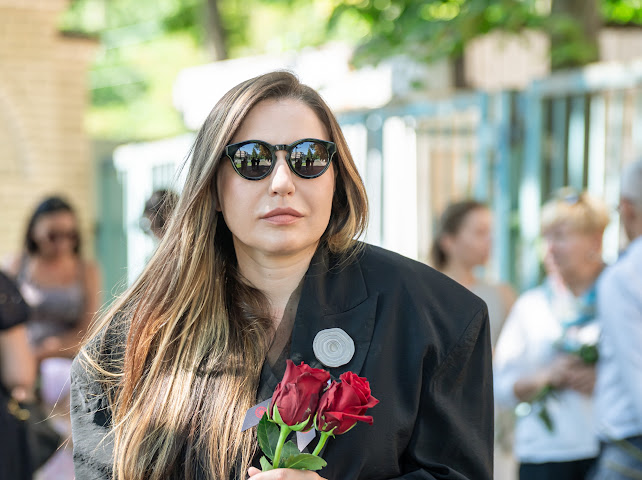
Ivan Verbytskyi, First Deputy Minister of Culture of Ukraine, noted that it is critically important to create conditions for the fulfillment of every individual in Ukraine. "It would seem — the Soviet Union condemned Nazism, but nevertheless concealed Nazi crimes. This happened because it was a totalitarian regime that denied the very idea of human rights. In fact, respect for human rights, and a state basing its existence on respect for human rights — no circumstances can be more important than this respect for the right to life, health, and education. This is what distinguishes us from a totalitarian regime, and it is what we are defending today in this war."
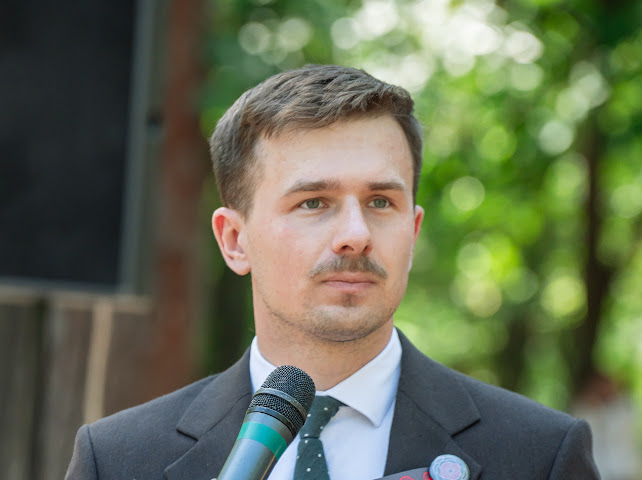
Honored Artist of Ukraine Petro Chornyi remarked: "When hatred defeats humanity, then a part of humanity's soul dies."
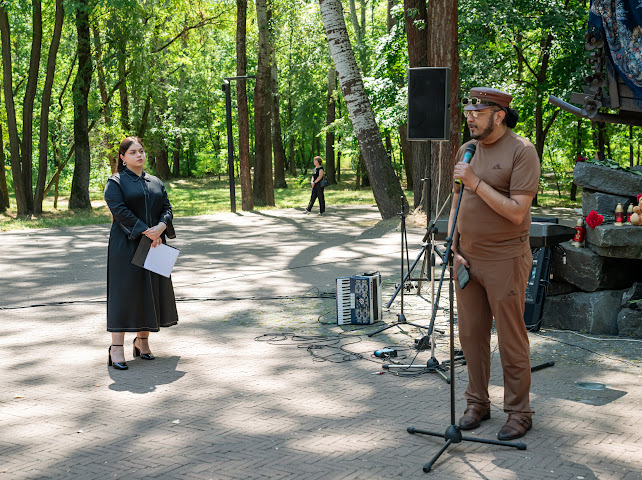
Anna Sdobnova, Deputy Head of the Ukrainian Institute of National Remembrance for Digital Development, drew a parallel between the question Roma children asked more than 80 years ago and the question Ukrainian children ask their parents today: "Why are they killing us?" — and the answer remains unchanged: "Simply because we exist." She emphasized that certain words resonate with particular importance today: we must remember the dead in order to preserve the living.
Yulian Kondur, adviser to the Verkhovna Rada Commissioner for Human Rights (Ombudsman), spoke of the importance of the Roma civic movement and noted that the study of history can begin precisely with remembrance and commemoration.
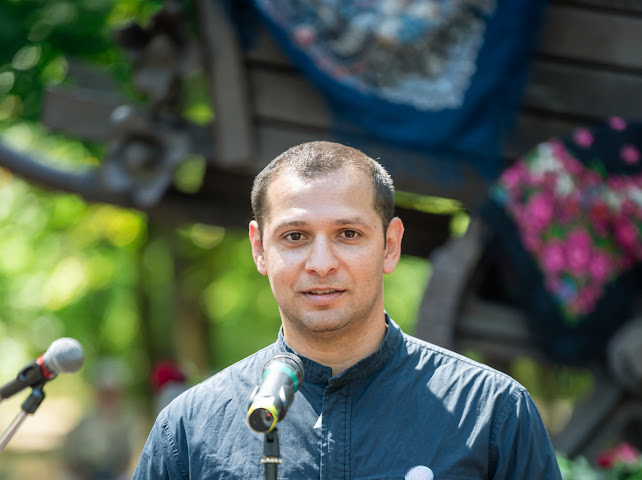
Natalia Oliinyk, Coordinator of the Council of Europe's project on national minorities and Roma, stressed the importance of teaching children history: "such chapters help identify manifestations of discrimination at early stages and prevent terrible crimes in the future."
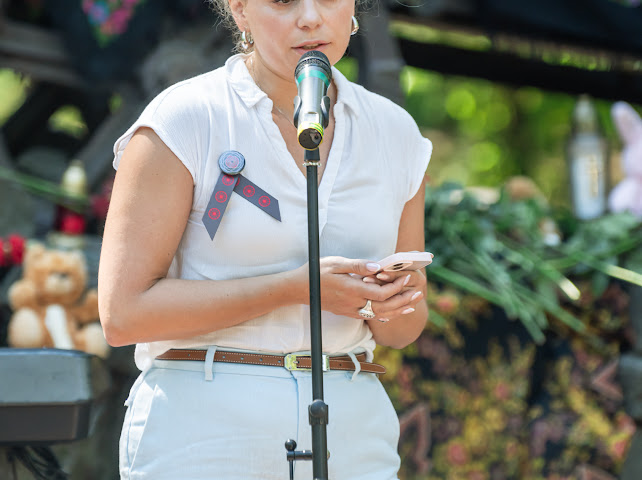
Speaking on behalf of the German government, Ms. Katrin Buchholz, Deputy Ambassador of the Federal Republic of Germany to Ukraine, said: "On behalf of the German Embassy, I want to say that it is a great honor for me to be here today. Twenty years ago, when I began my diplomatic career, no one, probably, could have imagined that a German diplomat would one day take part in such a memorial event in a country at war. Allow me to begin with the words of a Holocaust survivor, the Roma man Ceija Stojka. He spoke of the need to build a society in which we want to live — a society that allows future generations to live free of discrimination and protects the dignity of every person. Today we remember the hundreds of thousands of Roma and Sinti who were persecuted and killed under the Nazi regime. We must make every effort to fulfill these aspirations — in Europe, in Germany, and here in Ukraine."
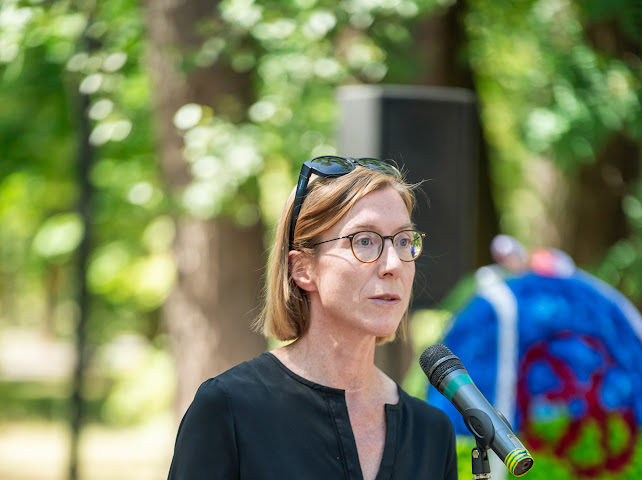
The cultural part of the program opened with the Academic Musical and Drama Roma Theatre "Romance," presenting literary and musical compositions dedicated to the theme of the genocide and the history of the Roma people. The ensemble performed songs about the difficult path of the Roma and about a mother searching for her children. People's Artist of Ukraine Leonid Sandulenko performed the song "The Old Roma Man." The musical program concluded with a performance by Sergio Babutsi, whose music intertwines Roma and Jewish traditions — just as the fates of these two peoples became intertwined in the tragedies of the 20th century.
At the close of the event, participants were invited to an evening program: at 7:00 p.m., the "Living Memory" film club screened a program of short films from Amaro Kino, dedicated to contemporary Roma cinema.
The commemorative events were organized by the National Historical and Memorial Reserve “Babyn Yar”, the State Service of Ukraine on Ethnic Policy and Freedom of Conscience, the Ukrainian Institute of National Remembrance, the Youth Agency for the Advocacy of Roma Culture “ARCA”, and the Kyiv Academic Musical and Drama Roma Theatre "Romance."
Photo: Stanislava Bannikova