Interfaith Prayer Service Held at Babyn Yar
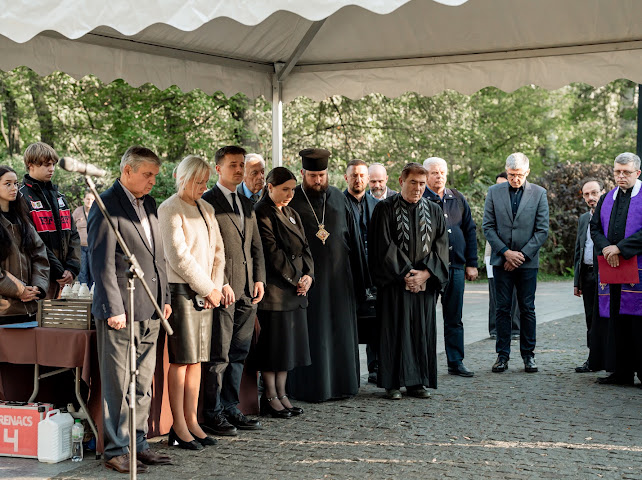
An interfaith prayer service was held at the National Historical and Memorial Reserve “Babyn Yar” on September 29, marking the 85th anniversary of the beginning of the mass shootings carried out by Nazi forces at Babyn Yar. The ceremony took place near the Menorah Monument and brought together religious leaders, representatives of Jewish communities, government officials, and members of the public.
On September 29–30, 1941, nearly 34,000 Jews from Kyiv were murdered at Babyn Yar. The massacre became one of the best-known examples of the Holocaust by bullets. Mass executions at Babyn Yar continued throughout the Nazi occupation of Kyiv, from 1941 to 1943. Among those murdered were Jews, Roma, Soviet prisoners of war, Ukrainian nationalists, and patients of a psychiatric hospital. Historians estimate that approximately 100,000 people were killed at Babyn Yar during the occupation.
Addressing the ceremony, Oleksandr Alforov, Head of the Ukrainian Institute of National Memory, emphasized the importance of coming together to remember the victims.
“Every year, the Ukrainian Institute of National Memory holds this ceremony so that we can come together in remembrance of those who found their final resting place here. Last year, we were forced to interrupt the commemoration because a Russian drone was being shot down above us. Today, air raid alerts are sounding again.
We must not forget the crimes committed by the Nazi, Soviet, and Russian regimes. Crimes must be stopped and perpetrators held accountable. Despite grief and pain, we must remain human—those who preserve memory and pass it on to future generations.
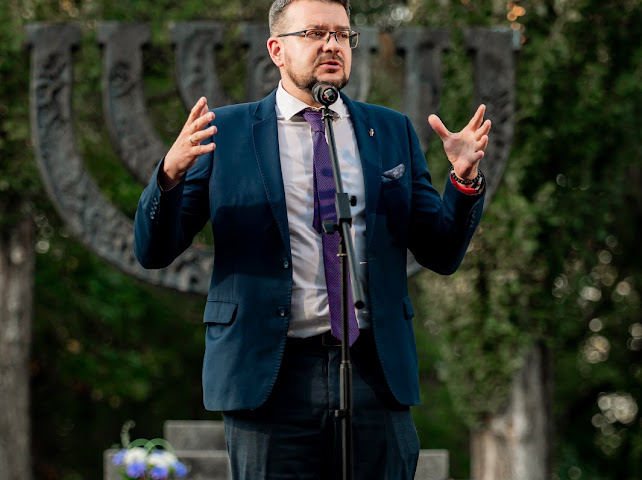
The Jewish community has lived in Kyiv since at least the 10th century. We will not allow anyone from outside to decide who belongs here—neither the Nazis nor the Russian regime.”
Ivan Verbytskyi, First Deputy Minister of Culture of Ukraine, spoke about the scale of the crimes committed at Babyn Yar and the importance of remembering them today.
“It is difficult to comprehend the scale of this crime. Living through a war today, we understand the value of every human life and the importance of protecting each one. We need to understand both the hatred that caused these mass killings in the past and the hatred that continues to cause violence today.
It is difficult to understand how this crime could have been silenced for so long—and why it has still not become a lesson for humanity. We can see that ‘Never Again’ has not become a reality. Preserving the memory of both past and present tragedies and doing everything possible to prevent their recurrence is a responsibility shared by every individual and institution.”
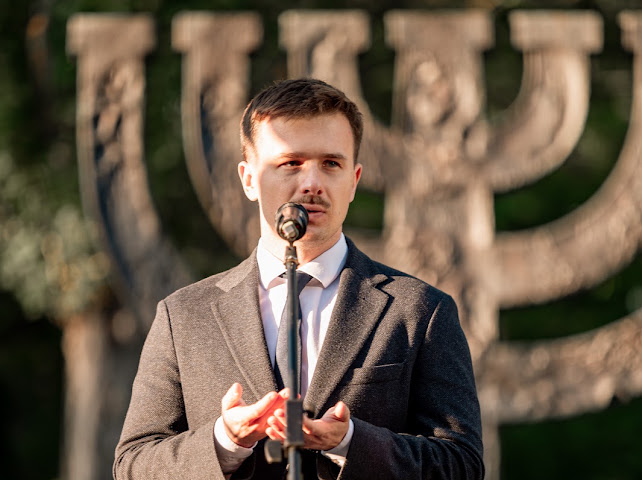
Viktor Voinalovych, Deputy Head of the State Service of Ukraine for Ethnic Policy and Freedom of Conscience, described Babyn Yar as one of the most tragic chapters in the history of the European catastrophe.
“We must remember and understand what happened here and honor the memory of those who were murdered. The mass killings continued throughout the occupation of Kyiv and were not limited to this city. Across Ukraine and Europe, history bears witness to similar crimes.
Today, through this collective act of remembrance, we appeal to the international community to help prevent such tragedies from happening again. We preserve the memory of the genocidal policies of the past, including the policies that Russia is, tragically, repeating in Ukraine today.”
The National Historical and Memorial Reserve “Babyn Yar” preserves the memory of crimes committed under Nazi, Soviet, and Russian rule. The Nazis carried out mass shootings at Babyn Yar; Soviet authorities later transformed the landscape of the site, contributing to the Kurenivka disaster in 1961; and on March 1, 2022, a Russian missile strike near the Kyiv television tower damaged the Babyn Yar memorial area and killed five civilians, including a child.
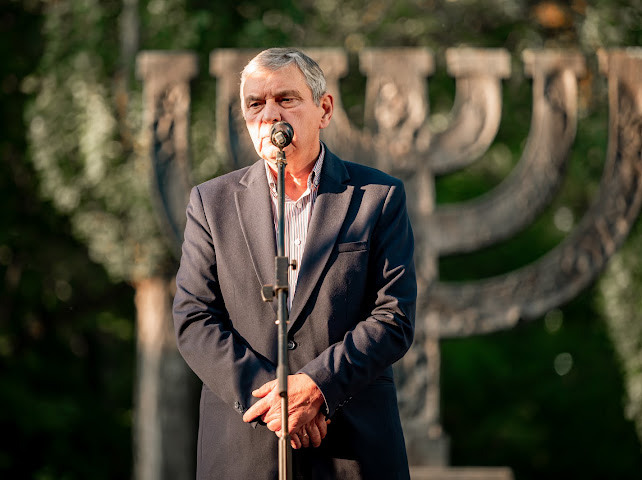
Roza Tapanova, Director General of the National Historical and Memorial Reserve “Babyn Yar” drew attention to the connection between the history of the site and the war in Ukraine today.
“We are at war again. But unlike under the totalitarian regimes of the past, we are not afraid to speak the truth or to remember. At its core, this is also a war for freedom and for the right to remain human. It is a war for the right to remember.”
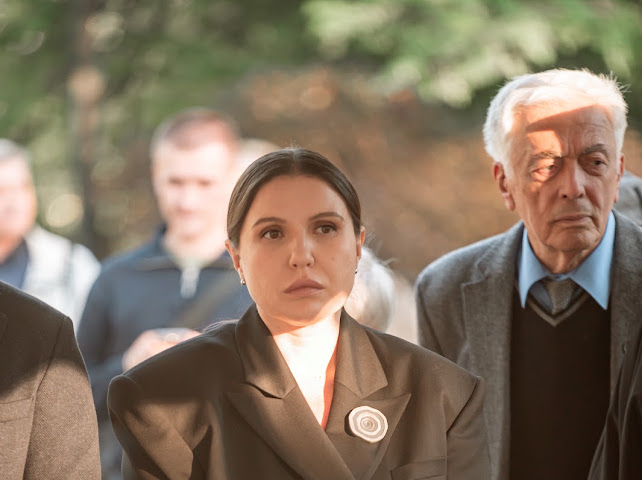
Yuliia Hnatiuk, First Deputy Head of the Ukrainian Institute of National Memory, spoke about the human dimension of the 1941 massacre and the value of human life today.
“It is heartbreaking to comprehend the scale of the Nazi punitive operation and to imagine what people experienced before their execution. Today, we understand more deeply how precious every human life is, because people are being killed every day. We thank the Armed Forces of Ukraine for making it possible for us to gather and remember, and for preventing new tragedies from taking place.”
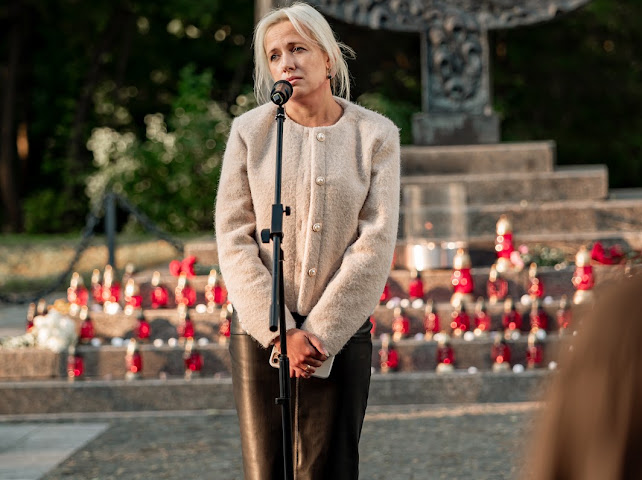
Historians estimate that up to 1.5 million Jews were murdered in the Holocaust across the territory of present-day Ukraine. During the ceremony, prayers were offered in their memory by representatives of several Christian and Jewish communities: Bishop Yefrem, Vicar of the Kyiv Eparchy of the Orthodox Church of Ukraine; Volodymyr Kondor, Deputy Head of the All-Ukrainian Union of Churches of Evangelical Christian Baptists; Father Vladyslav Zhuravskyi, Vice Chancellor of the Kyiv-Zhytomyr Diocese of the Roman Catholic Church; Oleksandr Dukhovnyi, Chief Rabbi of Kyiv and Ukraine for Progressive Jewish Communities; Ihor Shaban, Head of the Commission for Interconfessional and Interreligious Relations of the Ukrainian Greek Catholic Church; and Volodymyr Samodenko, pastor of the Kyiv Association of the Ukrainian Union Conference of the Seventh-day Adventist Church.
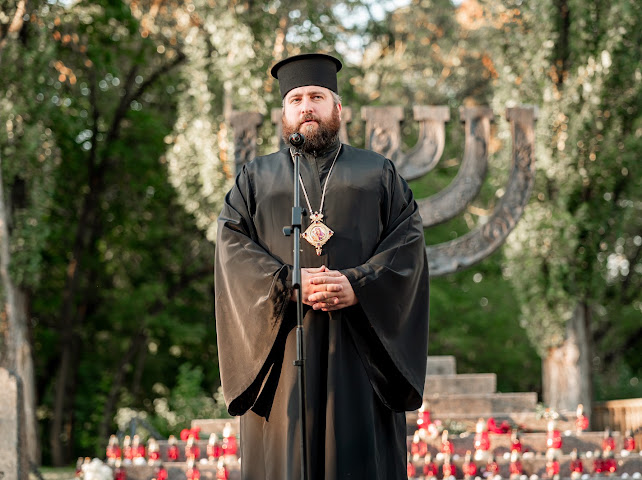
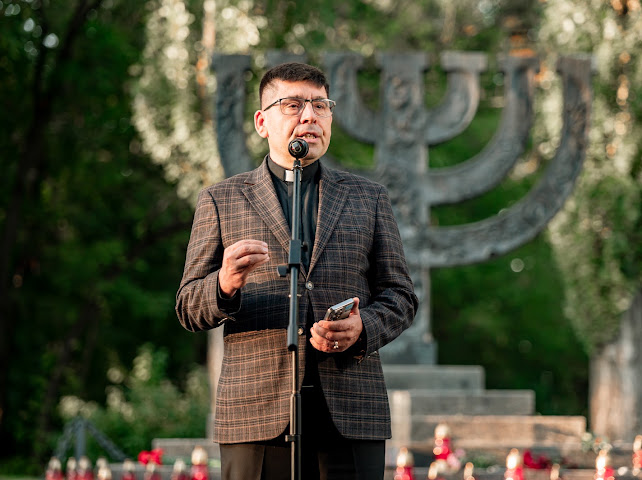
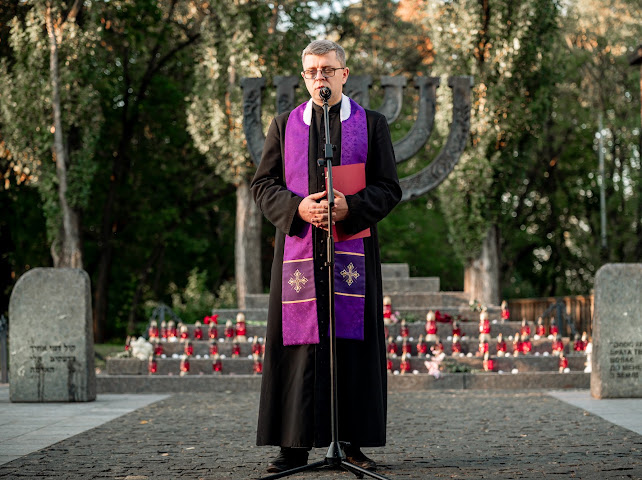
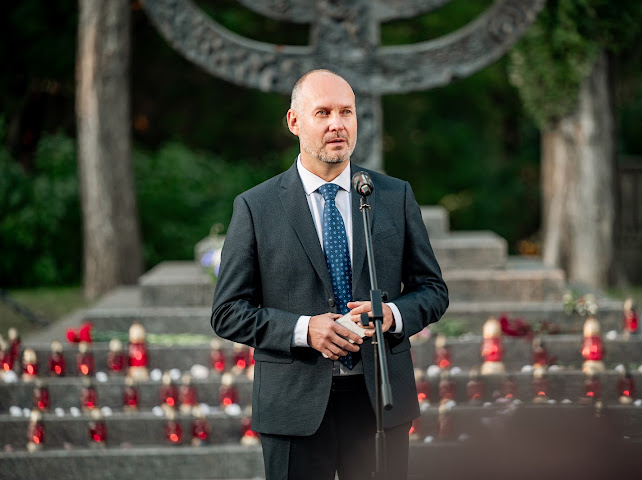
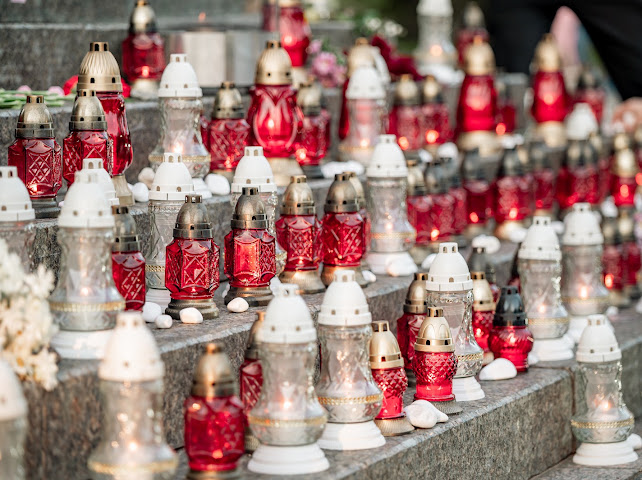
At the conclusion of the ceremony, participants lit memorial candles and placed stones at the Menorah Monument. In Jewish tradition, placing a stone at a grave or memorial is a sign of respect and a way of affirming one’s presence and remembrance.
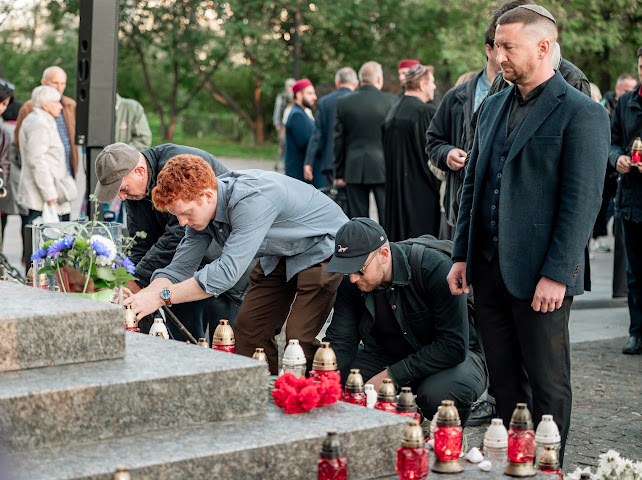
The commemoration was organized by the Ukrainian Institute of National Memory in cooperation with the State Service of Ukraine for Ethnic Policy and Freedom of Conscience and the National Historical and Memorial Reserve “Babyn Yar” to mark the 85th anniversary of the beginning of the mass shootings at Babyn Yar on September 29–30, 1941.