
“Invisible. Resilience: The Past and Present of Roma Communities” Opens in Kyiv
The Roma Youth Advocacy Agency ARKA, the National Historical and Memorial Reserve “Babyn Yar” and Kyiv National University of Construction and Architecture have opened the exhibition “Invisible. Resilience: The Past and Present of Roma Communities”.
The exhibition opened on September 29, 2026, in the main hall of Kyiv National University of Construction and Architecture, 31 Povitrianykh Syl Avenue, Kyiv.
“For KNUCA, it is important to be not only a place of education but also an open space for meaningful public conversations about memory and human dignity. It is especially significant that our university’s history is also connected to the commemoration of Roma victims: the artist and architect Anatolii Ihnashchenko, a graduate of our university, created the kibitka sculpture installed at Babyn Yar,”
said Oleksii Dniprovs, Rector of Kyiv National University of Construction and Architecture.
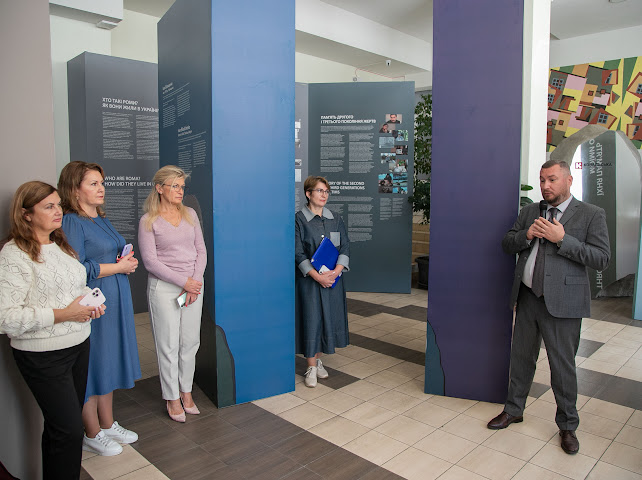
Nicholas Hayden, Head of the Cultural Department at the Embassy of Germany in Ukraine, emphasized Germany’s particular responsibility in confronting the history of the genocide of Roma and Sinti:
“For Germany, this is a matter of particular responsibility. The genocide of Roma and Sinti was part of the horrific crimes committed by Nazi Germany, its allies, and collaborators across Europe. For decades, the genocide of Roma did not receive adequate recognition in public memory. Remembering it today therefore means more than looking back at the past. It also means recognizing the dignity and rights of Roma communities today and ensuring that these rights are respected and protected in the future.”
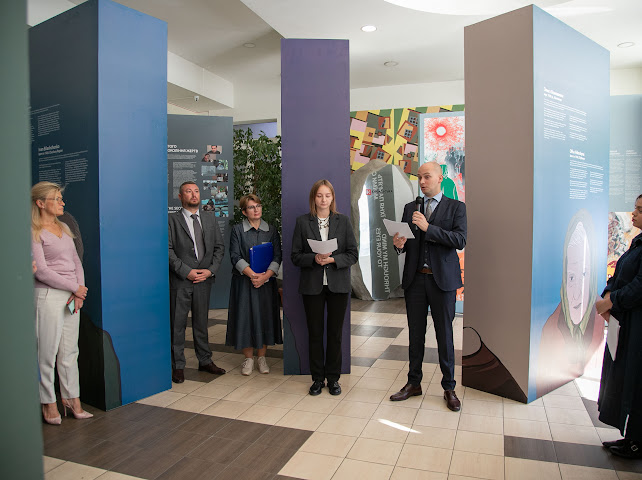
Yurii (Amir) Radchenko, a researcher at the National Historical and Memorial Reserve “Babyn Yar” noted:
“The tragedy of Babyn Yar affected different groups of people—Jews, Roma, patients of psychiatric institutions, Soviet prisoners of war, members of the Organization of Ukrainian Nationalists (Melnyk faction), and members of the Soviet underground. Behind each of these tragedies were individual people, families, and lives destroyed.
The history of Roma at Babyn Yar remained largely unspoken for decades. This is why it is important to speak about it today. We are pleased that this exhibition is being presented at a university, because it is important for young people to know this history and understand the significance of remembering every victim.”

Nataliia Tomenko, Deputy Director of the Roma Cultural Advocacy Agency ARKA, described the exhibition as follows:
“Invisible. Resilience: The Past and Present of Roma Communities is a thematic and narrative exhibition about restoring visibility. Once silenced, Roma voices today are being heard with confidence and clarity, and with a rightful claim to equality.
At the heart of the exhibition is Roma identity as a form of resistance, traced through history—from persecution during the genocide of Roma during the Second World War to the strength, visibility, and civic engagement of Roma communities in Ukraine today, amid their continuing struggle for justice during the Russian war against Ukraine.”
Drawing on the personal experiences of Roma survivors of the genocide in Ukraine, the exhibition explores memory, persecution, and the search for identity. It brings together memories of historical trauma with stories of contemporary Roma communities, highlighting their resilience, visibility, and contributions to the cultural and civic life of Ukraine.

Through survivor testimonies, archival materials, and contemporary artistic media, the exhibition traces the transformation of silence into voice, trauma into strength, and invisibility into presence. These are not only stories of survival in the past, but also stories about shaping the future.
“It is easy to tell a story, but difficult to live through it.”
— Raisa Andriichenko, Roma survivor and witness to the genocide of Roma in Ukraine
Venue
Kyiv National University of Construction and Architecture
31 Povitrianykh Syl Avenue, Kyiv
Exhibition Dates
September 29 – October 31, 2026
Opening Hours
Monday–Friday: 9:00 a.m.–5:00 p.m.
Admission to the opening and accompanying events is free.